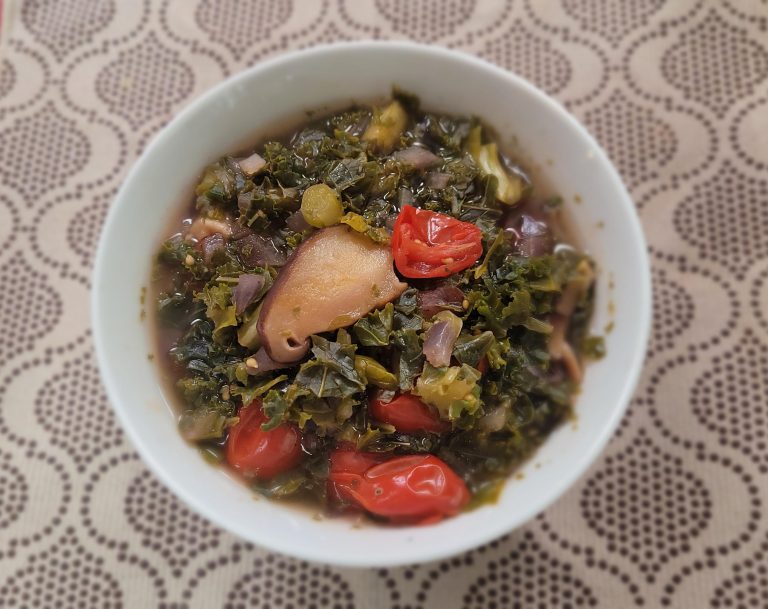
Kale Concoction (Vegetables for Breakfast)
Greens, Mushrooms, & Onions….oh, my!
Ingredients
- 2 cups Frozen kale (or 3-4 cups fresh kale, chopped)
- 1/2 cup Onion, chopped or minced Red preferred
- 1/2-1 cup Mushrooms (portabello, shiitakes, or a combo)
- 2 cups Broth (low sodium) or water Homemade is the best but it's good to have boxed broth available in your pantry.
- 2-3 tsps Balsamic or apple cider vinegar
- 1/2 whole Tomato, chopped (optional)
Instructions
- Mix all the ingredients together in a medium bowl to microwave for 8-10 minutes or a medium pot if cooking on the stove. Cook until the water or broth are flavorful.The mushrooms especially give a delicious umami flavor.
Notes
I often cook this dish in the microwave for about 8 minutes.I find that this dish has much better flavor if I use fresh ingredients, evenif the fresh is frozen by me. I clean & chop fresh mushrooms. I’ll use a fresh bag of chopped kale or chop fresh kale bunches. I chop onions (mostly red because they are the healthiest). I put these in the freezer and use them in avariety of dishes.
Why eat vegetables for breakfast?
1) They contains thylakoids, which reduces hunger, cravings, and increases satiety (a feeling of fullness). Whoah! Thylakoids are pouch-like structures found in plant cells.
Check out more information here: https://www.sciencedirect.com/science/article/pii/S019566631500197X
2) Starting your day in a “savory way” sets you up ** I use red onion almost every day. Since my grocery stores tend to have only giant red onions, I’ll chop the whole onion but only use part in the dish I’m making that requires fresh onion. The rest I stick into a bag that I already have in the freezer to use in most cooked dishes. For the “waste” part of the onion (skin and ends), I somestimes store them in a vegetable “scrap” bag that I keep in the freezer. I just make sure they are cleaned beforehand. When I build up enough scraps, I use them to make my own vegetable broth. It is much easier to control the sodium content and food sensitivities when you make your own broth. It’s important to balance out the different vegetables you use in your broth (don’t overdo the onions!) There’s lots of nutrition in vegetable and fruit skin, such as antioxidants, especially the bright colored ones like red onion (though all onion has terrific health benefits). (1) Research has shown that onions display many properties, including: anticancer, antibacterial, immunoprotective, anti-inflammatory, and neuroprotective. Onion wastes also exhibit inhibitory activity against oxidative stress and enzymes responsible for metabolic syndrome (34–36). Due to their high health benefits to humans, the anthocyanin content of red onion bulbs and skin is extracted during processing. (1) (1) https://www.ncbi.nlm.nih.gov/pmc/articles/PMC9363841
1) They contains thylakoids, which reduces hunger, cravings, and increases satiety (a feeling of fullness). Whoah! Thylakoids are pouch-like structures found in plant cells.
Check out more information here: https://www.sciencedirect.com/science/article/pii/S019566631500197X
2) Starting your day in a “savory way” sets you up ** I use red onion almost every day. Since my grocery stores tend to have only giant red onions, I’ll chop the whole onion but only use part in the dish I’m making that requires fresh onion. The rest I stick into a bag that I already have in the freezer to use in most cooked dishes. For the “waste” part of the onion (skin and ends), I somestimes store them in a vegetable “scrap” bag that I keep in the freezer. I just make sure they are cleaned beforehand. When I build up enough scraps, I use them to make my own vegetable broth. It is much easier to control the sodium content and food sensitivities when you make your own broth. It’s important to balance out the different vegetables you use in your broth (don’t overdo the onions!) There’s lots of nutrition in vegetable and fruit skin, such as antioxidants, especially the bright colored ones like red onion (though all onion has terrific health benefits). (1) Research has shown that onions display many properties, including: anticancer, antibacterial, immunoprotective, anti-inflammatory, and neuroprotective. Onion wastes also exhibit inhibitory activity against oxidative stress and enzymes responsible for metabolic syndrome (34–36). Due to their high health benefits to humans, the anthocyanin content of red onion bulbs and skin is extracted during processing. (1) (1) https://www.ncbi.nlm.nih.gov/pmc/articles/PMC9363841